Society
/
October 8, 2026
Black women working for the federal government did what they were supposed to do. Yet their achievements could not protect them from the political winds.
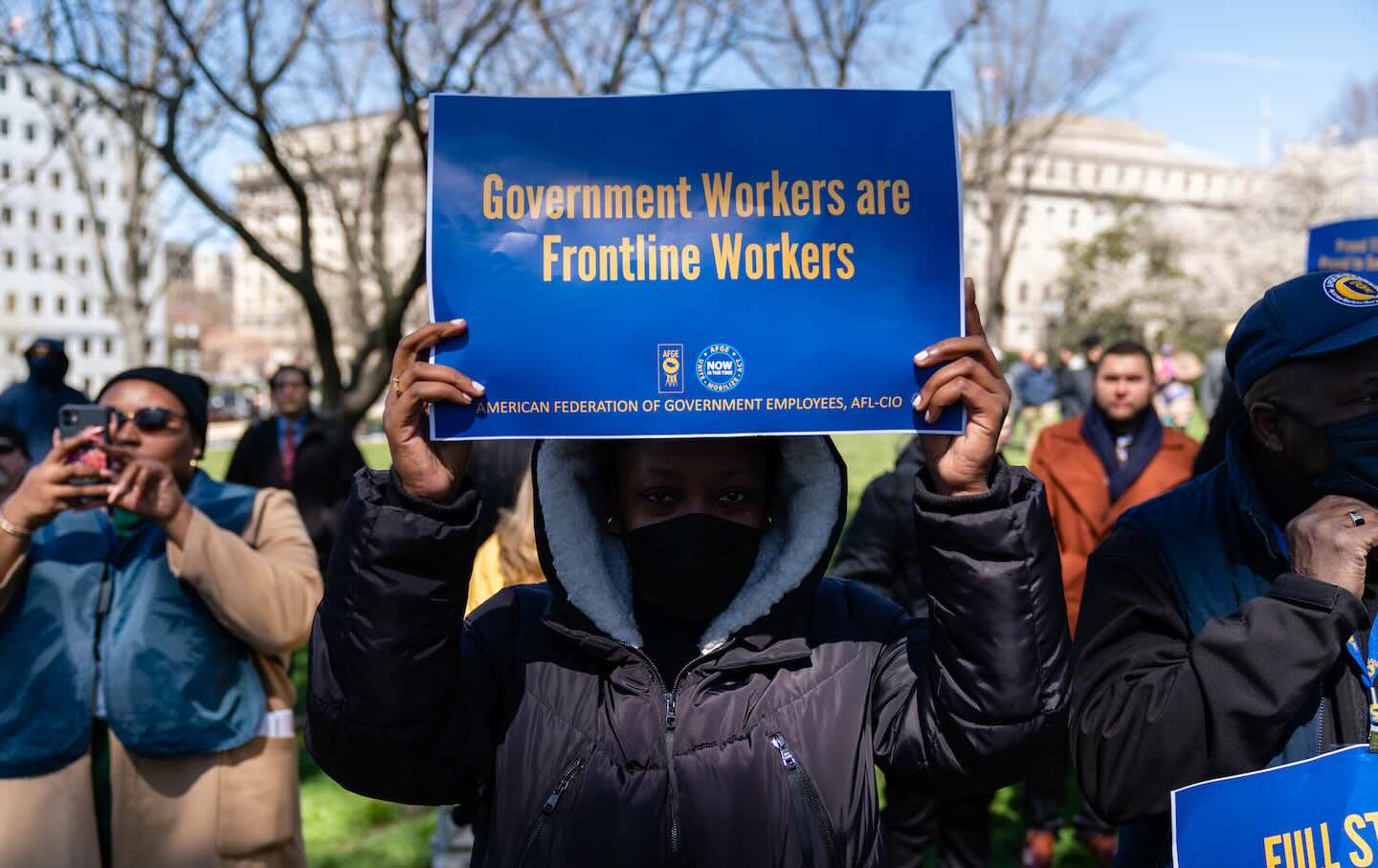
A demonstrator holds a sign during an American Federation of Government Employees rally for worker’s rights in Washington, DC, on March 29, 2022.
(Eric Lee/Bloomberg)
When Sharon Davis opened her e-mail at 5 am on April 1, 2025, she learned that she had been fired from the Food and Drug Administration after 24 years of employment. She felt a mix of emotions: anger, disbelief and—most prominently and undeservedly—shame.
“I was like, ‘What do I do now?’” Davis, 55, told MindSite News. “It was a gut punch. I’ve never been fired before. This is the first time I haven’t had a job in my life.”
Davis had moved steadily up the ranks at the FDA, working for the last five years as associate director for operations and quality management. Then, overnight, she became one of the more than 95,000 Black women who were fired or laid off from the federal government as result of massive job cuts implemented by Elon Musk and the Department of Government Efficiency (DOGE) and the elimination of diversity programs.
Davis says she had been the “go-to person” in her department, and in the initial weeks and months after her job loss she was in denial about her firing, waiting to get called back. She checked her e-mail often, expecting to get questions about where things were and what to do. When she wasn’t asked to return, she questioned her very worth and wondered if her more than two decades of service was of value.
Although she knew intellectually that it wasn’t about her, one refrain kept going through her head: “I didn’t deserve this. Why did this happen to me?”
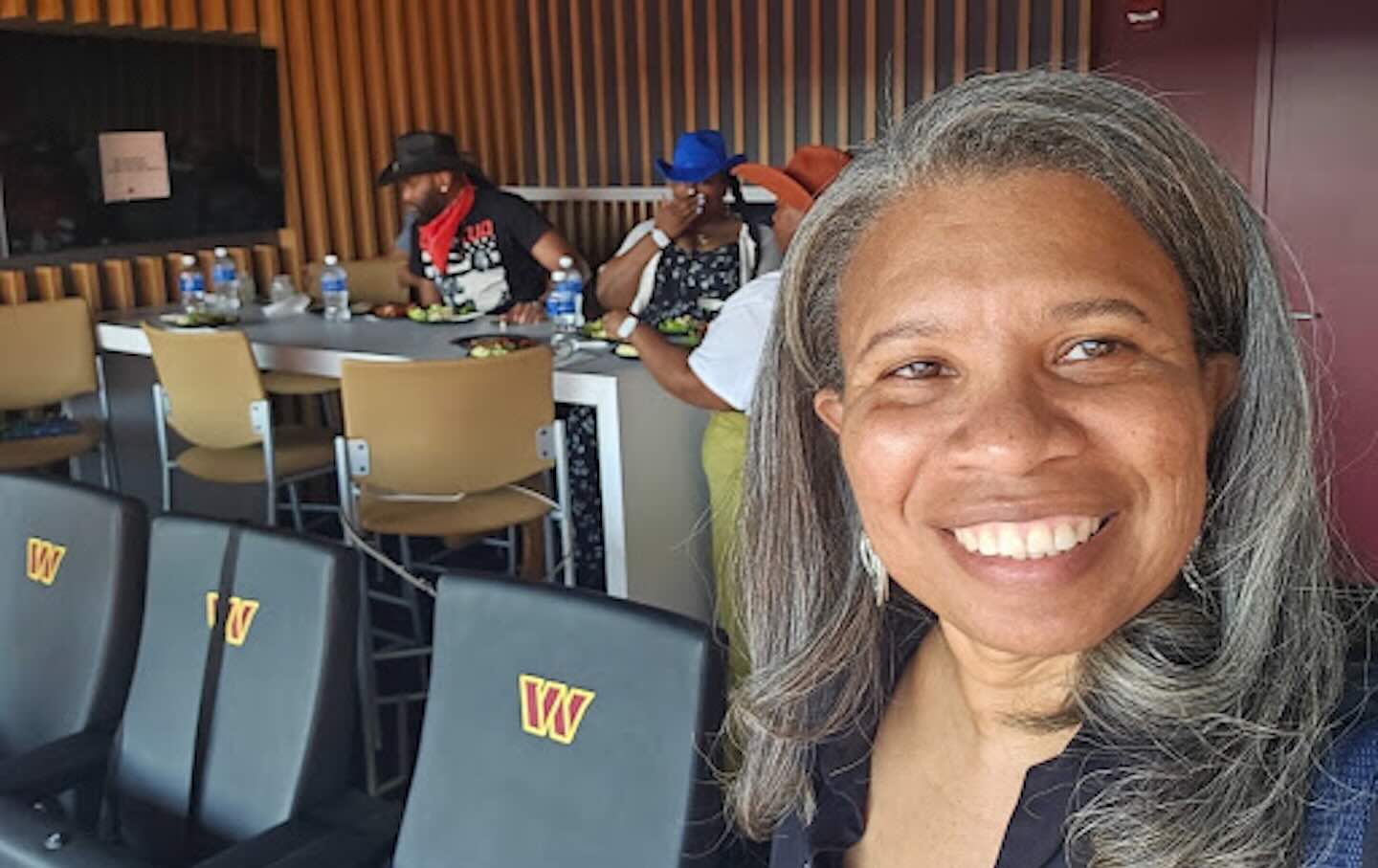
Pointing the Finger at Ourselves
Davis grew up on the Mississippi Gulf Coast. She enjoyed teen fiction, ran on the high school track team, and was the manager for the girl’s basketball team. Her grandmother, a college professor, was her role model, Davis said.
“I always remember her being very big on education, on being polished, presentable and professional,” Davis said. “When I saw her, I knew I was going to go to college and make her proud.”
After graduating from Jackson State University, a historically Black college in Jackson, Mississippi, with a bachelor’s degree in mathematics, Davis worked for the state of Mississippi and a nuclear waste facility in Memphis. She moved to Washington, DC, in 2002, where she worked at the FDA until she was blindsided by the mass layoffs in April 2025.
“When you don’t have answers and there’s not a clear thing to point to, we typically point the finger on ourselves, and oftentimes that looks like shame,” said Joy Harden Bradford, a licensed psychologist who founded and hosts the popular podcast, Therapy for Black Girls.“’Maybe I did something to deserve this. Was this about my performance?’ I think any time there’s a layoff or a firing, people assume rightfully or wrongfully that it was a performance issue, and we know that that was not the case here.”
Working for the civilian federal government brought job security and a “path to stability”—especially for more than 200,000 Black people—said Bradford. “You get this job and you never have to worry about it, right?” she said. “So for it to be snatched was incredibly disruptive.”
By September 2025, Black women’s unemployment had surged to 7.5 percent, compared to 4.4 percent of all US workers at that time—a net loss driven entirely by losses in the public sector, mostly in federal jobs, according to labor economist Valerie Wilson of the Economic Policy Institute. In the public sector as a whole, more than 155,000 Black women lost their jobs between 2024 and 2025.
The mass layoffs shook up people’s sense of order and predictability and left them reeling.
Christy L. Erving, an associate professor in the Department of Sociology and Population Research at the University of Texas at Austin, says many Black women like Davis who earned important positions in the federal government had strong feelings of mastery—the sense of having a high degree of control over one’s life and future directions. Then, abruptly, things changed.
FIRED: The DOGE Layoffs Hit Black Woman Hard. A Year Later, Many Are Still Reeling
“After their job loss, their sense of mastery was reduced,” said Erving. “When you feel that you don’t have a sense of control over your future, that you can get fired at will, there’s an increased risk of poor mental health.”
For Davis, it was more than disruptive. It was a blow to a career that she had cultivated for more than two decades. The firings were made worse because there was a narrative that those who were part of the reduction in force (RIF) weren’t doing their jobs and were not necessary, Davis said.
“It was all in the way it was done and the things that were said about the people who were ‘riffed,’” said Davis. “It was degrading.”
Davis was forced into retirement because she was over 50 and had at least 20 years experience, which means she qualified for Discontinued Service Retirement (DSR). Her health insurance was cut off and, because of her age and years of service, she did not qualify for severance pay. Instead, she was supposed to receive a pension the month after her firing.
But, Davis recalled, so many people had lost their jobs that there weren’t enough people left to process the paperwork in a timely manner. She didn’t receive a payment until July 2026—a year after her firing.
The early days of unemployment were an enormous struggle, she admitted.
“I worked in the government for so long, I haven’t had to look for a job in 20 years,” Davis said. “Some days I just laid there not knowing what to do next.”
Davis said working for the FDA gave her a sense of purpose. “My job was everything,” Davis said. “It was what I did. Now I don’t have that.”
She didn’t share the news of her job loss with her family until months after her firing—and still has not shared her unemployment status with some neighbors.
“I just don’t want to get into the details,” Davis said.
“We Forget Our Value Is Inherent”
Bradford says it’s dangerous to have our identity and sense of self-worth tied to career and professional pursuits because “it’s not anything that we have control over.”
“We know that those things can eventually end or be taken away or changed,” Bradford said. “When our value only comes as a function of the roles that we serve, we forget that our value is inherent. We are worthy and deserving just because we’re human.”
Events like the mass firings of federal workers are a reminder, Bradford says, “to make sure that we are involved in other things that give us value and allow us to be restored that aren’t actually a function of our career or our role.”
Like many successful Black women in the workplace, Davis presented an image of strength, resisted showing vulnerability, and suppressed emotions of anger. These were tools Black women use to combat negative stereotypes and succeed in the workplace.
In her research, Cheryl Woods Giscombé, a psychiatric nurse practitioner, health psychologist, and professor at the University of North Carolina at Chapel Hill, found that the need for Black women to be strong and carry often unmanageable loads—to be, in essence, Black Superwomen—can set them up for a demoralizing fall when intense events like being fired from a long-term job occur.
Giscombe, the author of the 2024 book The Black Woman’s Guide to Coping with Stress, created the Superwoman Schema, a framework that describes how Black women experience and cope with stress. Women who fall into this pattern feel obligated to present an image of strength and tend to suppress their emotions, resist being vulnerable, are intensely motivated to succeed and feel an obligation to help others.
Current Issue

Giscombé developed the Superwoman Schema out of earlier research from other scholars on the concept of the “Strong Black Woman,” which characterized Black women in terms related to strength—strong, resilient, unbreakable.
On one hand, Erving said, this created a positive characterization of Black women in response to stereotypes that created the racist trope of the “Angry Black Woman.” On the other hand, she noted, researchers are now recognizing the “burdens of what it means to be a strong Black woman and uphold this image, even when you’re experiencing adversity, even when you’re experiencing gender racism and unfair treatment across multiple domains of life.”
The impact, she says, can be overwhelming.
“Black women who endorse this notion of being a Superwoman or a Strong Black Woman actually experience greater risk for clinically diagnosed depression and also depressive symptoms,” she says. She ticked off the symptoms: “feelings of sadness, feeling like a failure, crying, loss of interest in daily activities, sleep disturbance, fatigue.”
The two characteristics of the Superwoman framework that are most hazardous to the mental health of Black women are the obligation to help others at their own expense and holding in or suppressing their emotions, said Erving, citing a 2024 Health and Retirement Study she co-authored that included a national sample of over 1000 Black women age 51 and older.
Anger suppression occurs when Black women don’t feel comfortable expressing feelings of anger.
“They try to hide or conceal when they’re feeling angry, so it’s sort of like I’m internalizing my anger,” said Erving. “I may have those feelings, but I’m not outwardly expressing those emotions.”
Burying their anger put Black women at greater risk to experience depressive symptoms and clinically diagnosed depression, Erving says. Her hypothesis, not yet proven, “is that because of those negative stereotypes attached to Black women being angry, anger suppression is essential for Black women to be taken seriously in the workplace.”
It’s a tradeoff that comes with real personal costs.
“It’s something they feel they have to do in order to not be on the receiving end of being stereotyped,” Erving says. “But that also is doing something negatively internally in terms of their psychological well-being.”
Black women also face another obstacle: They are more likely than other racial and ethnic groups to be unmarried and to be the primary breadwinner for their families, attributes that researchers say are associated with heightened risk of depressive symptoms and depression.
Unmarried women may lack both the economic and social-emotional support that a partner could provide, Ervin notes, and they may have less wealth and economic reserves to help them manage a sudden loss of income.
“I think all of that is related to why we see those without a spouse actually having higher depressive symptoms,” she says.
Moving Forward
Davis, single and child-free, lived off her savings until her first retirement check—a full year after her layoff. Seeing her nest egg dwindle was stressful. More than a year after her position was eliminated, Davis is still unemployed and trying to process how to move forward.
Popular
“swipe left below to view more authors”Swipe →
“This wasn’t my plan,” says Davis of her forced retirement. “My plan was to retire from the federal government in five years when I was eligible—in 2030.”
Today, the former FDA executive volunteers for a number of food banks that provide meals for unhoused and low-income residents in the Washington, DC, area including Martha’s Table, So Others Might Eat, SHARE and the Capital Area Food Bank. Some days Davis helps pack or sort food donations, and on other days she helps serve food to the most vulnerable populations in the city.
“Volunteering keeps me busy and gives me a sense of purpose,” Davis said. “It makes me feel like I’m helping someone else.”
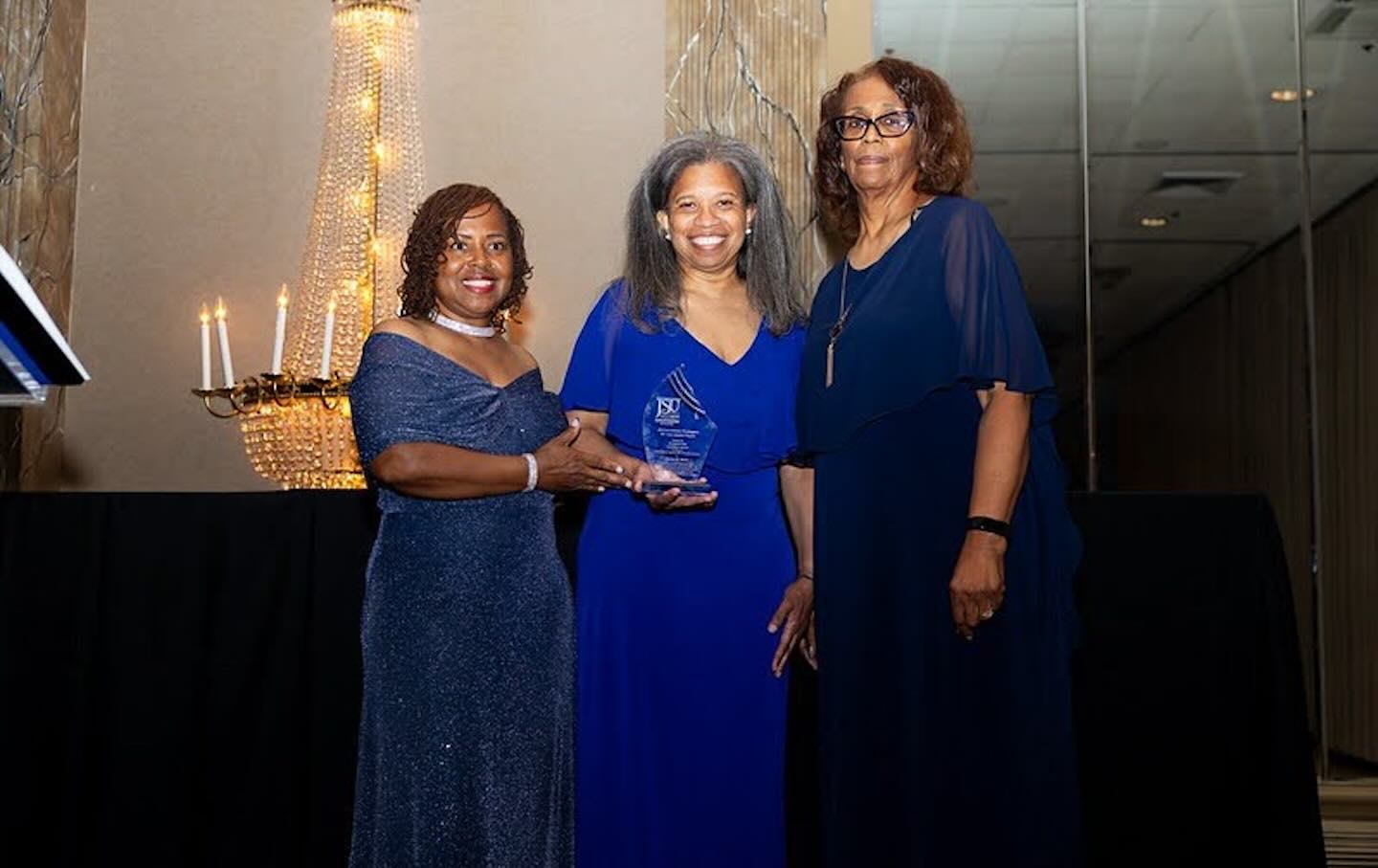
Davis also volunteers with fundraising efforts to raise awareness for Black colleges, including serving on the local and national boards of the historically black colleges and universities (HBCU) alliance. A former president of Jackson State University’s Greater Washington alumni association for nearly a decade, she now helps the organization raise money for student scholarships. Recently, Davis received the alumni association’s trailblazer award during its annual gala this year.
“I was very honored to receive it,” Davis said of the trailblazer award. “Just knowing that people recognized my contributions meant a lot. It made me feel like I must be doing something right. I was very grateful.”
Davis wants to work again, ideally return to the federal government in some capacity. She meets with her former coworkers for happy hour every other month. Her entire department was eliminated, and everyone lost their jobs. They check on each other frequently and that has meant a lot, she said.
But the camaraderie and her volunteer work, though important, has not taken away the pain of her federal firing: The hurt is still there. She doesn’t remember the last time she’s laughed or felt better about life. She isn’t there yet.
“I have my days,” Davis says. “I just never saw anything like this happening to me.”
More from The Nation

A conversation with the author about her new novel, the experience of having a mother in prison, and the artist’s role in documenting atrocities.
Q&A
/
Victoria Law

The Ellison family’s $110 billion deal to acquire Warner Bros. Discovery means more top-down control, and less room for dissent.
Ben Schwartz

From pro-life summits to Palantir résumé drops, the David Network is discreetly building a pipeline for conservative college students.
StudentNation
/
Ethan Sun
Trump’s federal workforce cuts dismantled a job pipeline for Washington, DC’s Black community and gutted the well-being of the women who hold up that community.
Lottie Joiner
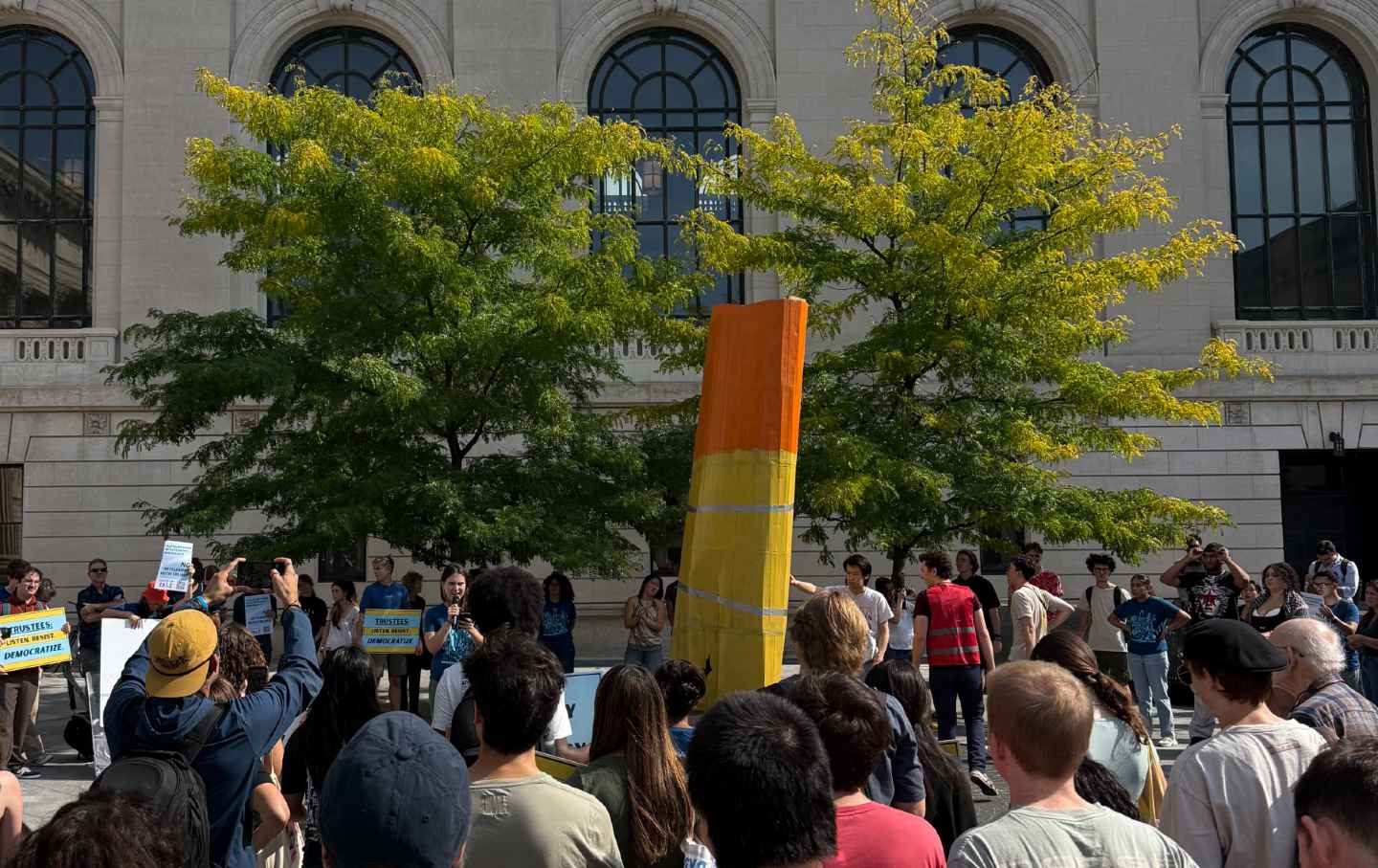
For the first time in more than 50 years, Yale students gathered around an iconic sculpture to protest their university and their government.
StudentNation
/
Zachary Clifton

The Austrian capital chose not to privatize the commons, and it shows.
Kate Wagner


