Society
/
October 9, 2026
After the federal firings, Black women felt betrayed and disillusioned. One longtime federal worker learned from experience the importance of community.
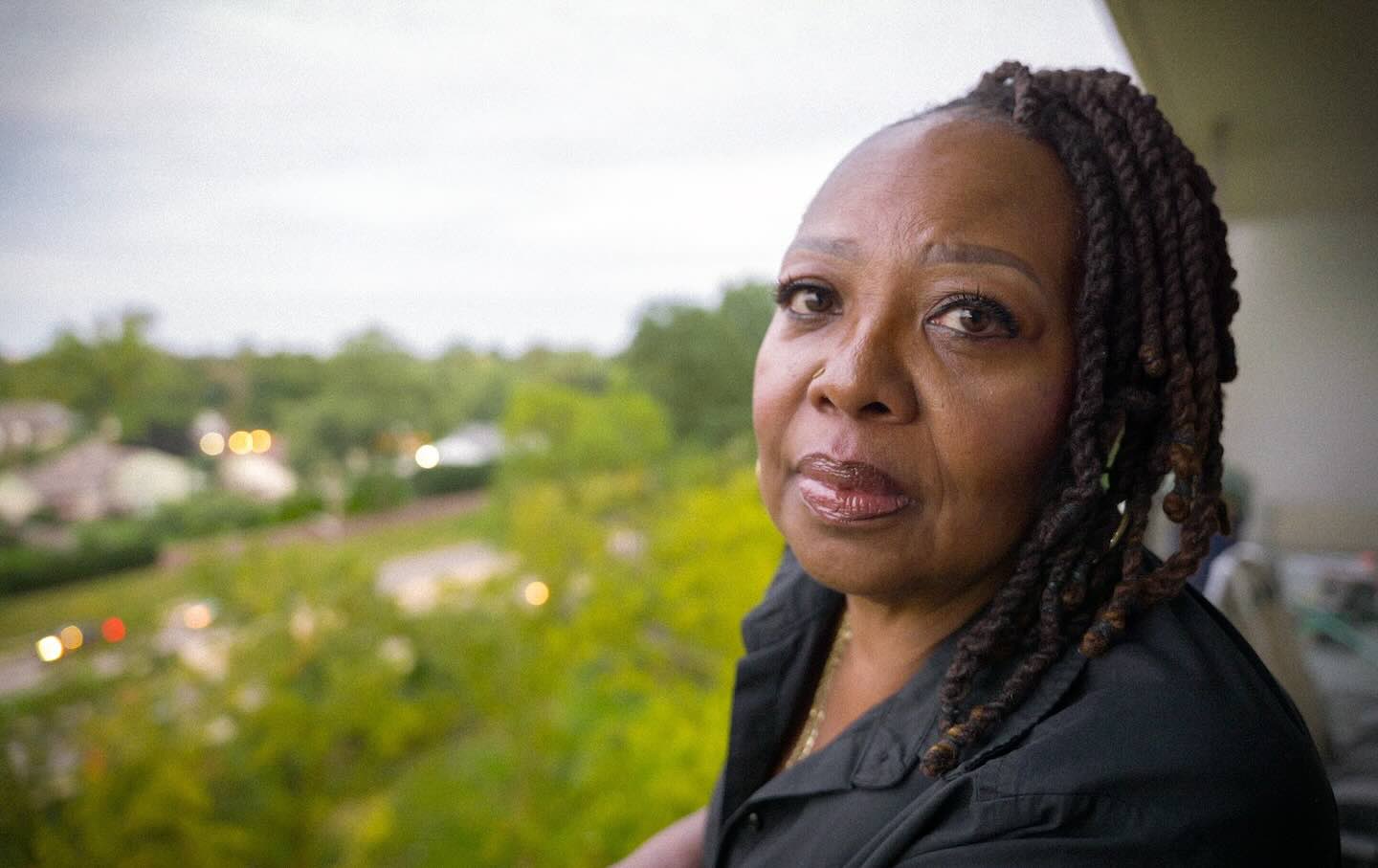
On April Fool’s Day last year, Philadelphia federal worker Darlene Tart-Scott arrived at work only to find out she had been laid off. Minutes later, she was on a train home, carrying the items she had been allowed to scoop up from her office.
“Once I stepped off the train and saw my husband, I cried so long and so hard,” Tart-Scott, 65, remembered. “I have never cried like that before in my life, including the death of my parents. It felt like my soul had been snatched right from under me, and by a committee of people who didn’t know anything about my work or my office or how we work. That just hurt so bad.”
She was comforted by her husband, George, who she says is her best friend. “I’m not a crier, but I have to admit, he saw more tears from me in one week than he had in our 10 years together,” Tart-Scott said. “He didn’t know how to handle that, so he just held me until I was finished.”
But in the months after Tart-Scott was fired from her job at the Administration for Children and Families regional office in Philadelphia, she was so “mentally overwhelmed and disillusioned” that it began to cast a shadow over their relationship. She also lost weight and her hair started falling out. Her doctor diagnosed her with hypothyroidism. But Tart-Scott believes her health decline was a result of the stress from the firings. She sought counseling after noticing that she was not treating her husband, a 1990 Iraq War veteran, with her usual kindness.
“I had to get my mind right. I was really struggling,” Tart-Scott recalls. “My patience was very, very thin.”
Reliving the Trauma
Tart-Scott sought to move on, but it was hard to forget the day she lost her job. She had arrived at work at her usual time at 6:45 am. She waved her electronic key card in front of the sensor, but it didn’t work. She knocked on the door and a staff person let her in the office.

Tart-Scott sat down, turned on her computer, brought up her e-mail and learned that she had been fired.
“The letter basically said to gather up what you can and go on about your business, which is what I did,” Tart-Scott said of the e-mail. “It was heartless, just heartless.”
For some Black women who lost their jobs in the government, the federal firings could be described as institutional betrayal, said Seanna Leath, associate professor of psychological and brain sciences at Washington University in St. Louis.
“I think some Black women have learned that exceptional performance provides at least some type of protection within racist and sexist institutions, like, ‘Work twice as hard, get the credentials, don’t give anyone a reason to question you,’” said Leath, an applied developmental psychologist and community-engaged scholar. “Being fired after following those rules can be psychologically destabilizing.”
Black women often did far more than the work described in their job descriptions, Leath added.
“Some Black women may have spent years performing invisible labor,” Leath said. “We know that Black women oftentimes take on more work within a workplace, particularly around caregiving, emotional labor—you’re mentoring other Black employees, maybe serving on diversity committees, or you’re starting new programs, community partnerships, changing policies, creating spaces where others could belong. They didn’t just lose a position. It’s also all of these things they were building up.”
Tart-Scott had been with the department for more than two decades and had just received a promotion and an award.
“And then this happens,” Tart-Scott said.
Before serving in the federal government for 20 years, Tart-Scott worked in corporate America, at a federally funded health center, and at the Head Start program in Philadelphia. She began working for the government in 2004, when she was 44, and served in an office for regional operations with the Administration of Children and Families, a division of the Department of Health and Human Services. Her office provided administrative support and supplies for Pennsylvania, Delaware, Maryland, Virginia, the District of Columbia, and West Virginia.
The financial stability that came with working for the federal government allowed Tart-Scott to send her children to college, participate in extracurricular activities and go to Disneyland for a family vacation, something she didn’t do growing up because her parents couldn’t afford it.
Tart-Scott loved her job. She says she received stellar evaluations, leading to performance pay increases and awards. In addition, she received accolades “from citizens that I’ve served, as far as Guam and Puerto Rico, wherever I was of service.”
“We were the conduit: We figured out what was needed and made it happen,” Tart-Scott said. “I created partnerships. I could see the impact that I had. I know what I was doing was helping people.”
Current Issue

“Loving Me Back to Sanity”
After her firing, it was Tart-Scott that needed some help. She was struggling mentally, but needed to be strong for her family, especially her husband, George, who was plagued by health issues including chronic obstructive pulmonary disease, which impacts airflow to the lungs. He also has diabetes and a rare eye disease. For his sake, in particular, she pushed herself to move forward.
“I know that he depended on me emotionally to help him keep going,” Tart-Scott said. “I knew that if I broke down, if I wasn’t the person that he needed and depended on, what would happen to him?”
She and George have known each other since the 1970s, more than 50 years. He went to their neighborhood’s all-boys school and she attended the all-girls school just a block away.
Recalling that he had dated some of her friends in high school, Tart-Scott said, “Who knew some 50 years later he would become my husband and best friend? He was fine as the hair on a frog’s neck and had this real deep voice. I had no idea back then that we would end up happily together.”
But in 2015, Tart-Scott wrote on a Facebook post saying she needed a dance partner. George answered. The couple married in 2017, “and we’ve been dancing ever since,” said Tart-Scott.
What she loves most about her husband, Tart-Scott says, is his laugh, and that he’s very affectionate. When she got fired, she says, it was George who made her feel safe.
For all those reasons, she concentrated on their relationship. Now that they have more time together, she says, they binge-watch TV programs—the soap opera Beyond the Gates is their favorite.
“I know that I got on my husband’s nerves with the mood swings, but he never reacted in any way but caring,” Tart-Scott remembered. “I thank him every day for loving me back to sanity.”
Grieving the Death of a Career
Tart-Scott was the breadwinner of her family. George had retired from a career in the railroad industry two years earlier. She also had her own plans for retirement, which DOGE destroyed.
Popular
“swipe left below to view more authors”Swipe →
Like many other Black women fired by DOGE and the elimination of DEI, Tart-Scott felt a sense of disillusionment knowing that she could lose her job based on the political climate. Despite years of successful performance, she and other Black women realized they were seen as expendable, said Leath, the Washington University psychologist.
“This kind of structural cruelty can disrupt this sense of professional identity, competence, security itself and then also just your [personal] identity,” Leath said.
Job loss can collide with gender and racialized expectations that Black women have to be strong, emotionally controlled, responsible for others and capable of persevering despite adversity, Leath added. “Caretaking and not being able to provide—financially and emotionally—in ways that you previously did, can cause stress that seeps into our relationships,” she said.
“There’s this idea that Black women should emotionally suppress how they’re doing and this idea that, ‘I can’t fall apart. People depend on me,’” Leath said. “Black women may interpret anxiety, depression, exhaustion, grief as something that we should just push through rather than really sitting with it or that it’s something that deserves attention and care.”
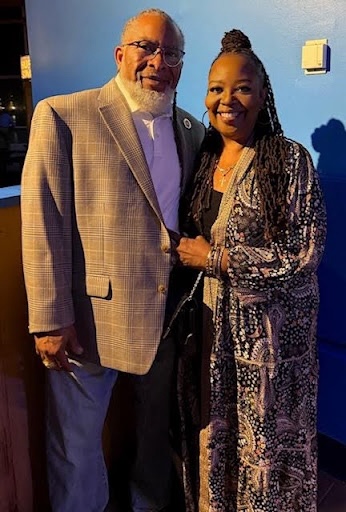
Tart-Scott “pushed through” by working on herself. She started doing Tai Chi and yoga to calm her stress. She signed up for classes. She became a more involved grandmother to her three grandchildren, one of whom has autism.
Tart-Scott also found solace in a group chat with other fired federal workers and does a check-in with her former coworkers once a week. What hurts her most is knowing that some of her former colleagues haven’t checked in on her at all since her firing.
Denese Shervington, a psychiatrist, public health practitioner, and cofounder of the Institute of Women and Ethnic Studies in New Orleans, says that some people may be at risk for developing a trauma-based condition such as post-traumatic stress disorder if there is no support.
“Most of us are going to experience in our lifetime an extremely traumatic event,” said Shervington, who also chairs the Department of Psychiatry at Charles Drew University in Los Angeles. “Healing is not to take an individual and say, ‘Let’s do therapy and let’s give you medication.’ That might be necessary, but one has to think about the collective processes for our community to heal.”
Shervington says healing is hard to do on our own. She notes that with collective trauma—when a group of people have experienced a traumatic event—we need collective resilience.
“Expecting individuals on their own to be resilient is very fraught,” said Shervington. “Eventually, I can’t get up anymore. I’m beaten. I’m broken. But if the group comes and says—”I know you’re down. We got you. You can do this. You can get through this. I’ll help you”—we survive.
And with the support of friends, former colleagues and family, that’s exactly what transpired for Tart-Scott.
“I started working on my outer self, and then my inner self got more confidence. She became nicer,” Tart-Scott said. “That kind of helped me to settle down a little bit. I know it’s backwards, but that’s what worked for me.”
A year and a half after being fired, Tart-Scott still grieves the death of her career. She describes the federal firings as “cruel.”
“I still just feel like, how dare you take my life from me and you never told me why,” Tart-Scott said. “It was particularly ironic because I worked for Health and Human Services—that ‘human part’ was nowhere in this entire process.”
Leath says it’s not a question of whether Black women are strong enough to survive these federal job losses—they’ve demonstrated throughout their lives that they are capable and creative. “We will make a way out of no way,” Leath said.
“The mental health question is, what happens when strength becomes an expectation that leaves little room to grieve, to ask for help, to be angry, or to admit that we have been harmed in this way? That there’s something worth grieving here,” Leath said. “We could be grieving our income, professional identity, relationships that have been built and also these futures that we thought were secure.”
Though she has retired and treasures the love and support from her husband and family, Tart-Scott says she still has periods where she tears up.
“It haunts you,” Tart-Scott says of her job loss. “It’s being angry. It’s crying while you’re driving for no particular reason. I’m not quite over it.”
More from The Nation

The first major hazing scandal in American history occurred at West Point in 1900. There are eerie parallels to what happened at Cornell’s Chi Phi.
Jasper Craven

The lack of access to university administration makes it hard for student reporters to report fully on campus affairs.
StudentNation
/
Heidi Ho

An interview with the author of The Hill about her debut novel and the artist’s role in documenting atrocities.
Q&A
/
Victoria Law
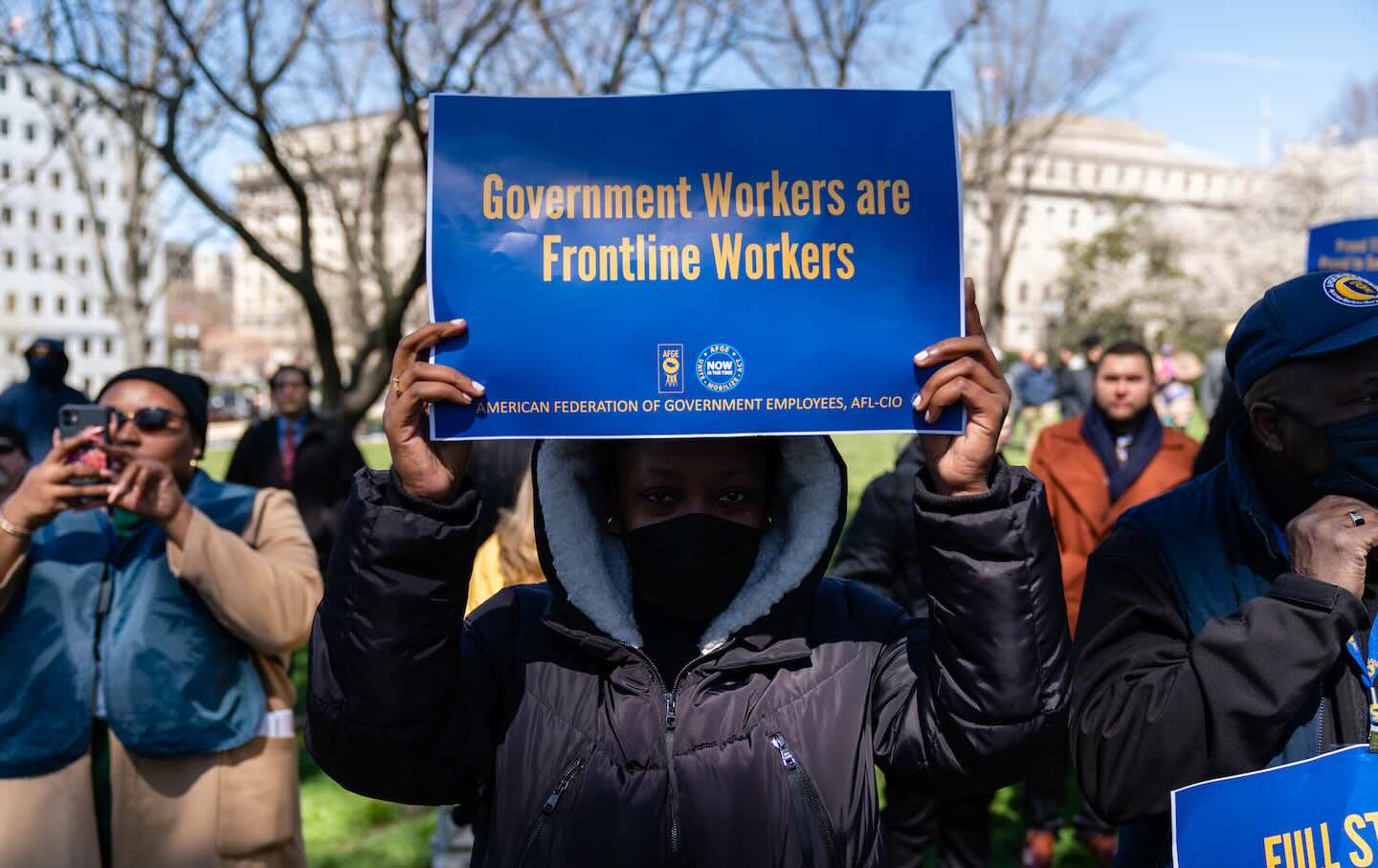
Black women working for the federal government did what they were supposed to do. Yet their achievements could not protect them from the political winds.
Lottie Joiner

The Ellison family’s $110 billion deal to acquire Warner Bros. Discovery means more top-down control, and less room for dissent.
Ben Schwartz

From pro-life summits to Palantir résumé drops, the David Network is discreetly building a pipeline for conservative college students.
StudentNation
/
Ethan Sun